
Global chip maker Intel on Monday said it could take a couple of years to address the supply shortage in the semiconductor ecosystem that is witnessing huge demand for tech products, accelerated by the COVID pandemic. Intel CEO Pat Gelsinger noted that the work and study-from-home trends during the COVID-19 pandemic have led to a "cycle of explosive growth in semiconductors" that has placed huge strain on global supply chains around the world. "We have been working diligently with our partners... to address constraints and increase output to meet demand, and we are acting to help ensure capacity to meet the world's needs for this new era... But, while the industry has taken steps to address near-term constraints, it could still take a couple of years for the ecosystem to address shortages of foundry capacity, substrates and components," he said at a virtual session at the Computex event.

College is where the manicured view of the world provided by one's family, encounters new trends. It is the dawn of exploration. Wishing for a sanitised bubble on campus appears hypocritical. The correct strategy, one would assume, is to weed out the violence while retaining the right to political debate, argues Shyam G Menon.

'We want to look at very strong entrepreneurial teams.' 'I want to focus on a full team and not just the entrepreneur, which is building innovative and amazing differentiated businesses in large markets.' 'We also look at business models that are proven and have reasonably good gross margins, which show that this is where a lot of value is getting built.'

The market breadth has turned sharply positive since May amid hopes that a decline in Covid-19 infections will lead to a revival in the economy. At 3.8, the advance-decline ratio (ADR) for May was the best since June 2020. So far this month, the ratio has remained above three - in simpler words, for every declining stock, there were nearly four advancing stocks in May and three this month. ADR is a popular market breadth indicator, with a ratio of more than two signalling an extremely bullish undercurrent.

The single-day recoveries on an average for the last few days have been more than 90,000, the ministry said.

Swiss brokerage Credit Suisse expects the economy to continue to show positive surprises and record up to 9 per cent growth in the next fiscal. For the current financial year too, the brokerage anticipates growth to be higher than the consensus forecast of 8.4-9.5 per cent, and printing in at around 10.5 per cent. As a policy, Credit Suisse does not provide absolute growth numbers in its forecast.

'In the medium to long term mid-caps tend to generate higher returns, albeit with increased volatility.'

TCS was the top gainer in the Sensex pack, rising over 3 per cent, followed by L&T, Bharti AIrtel, HCL Tech, Tata Steel, Bajaj Auto and Reliance Industries. NSE Nifty rallied 164.70 points to its fresh closing peak of 16,529.10.

Bolstered by improved domestic demand, India's services sector expanded for the fourth consecutive month in January as business activities quickened and rising business optimism is set to sustain the growth momentum, a monthly survey said on Wednesday. The seasonally-adjusted India Services Business Activity Index rose from 52.3 in December to 52.8 in January, pointing to a quicker expansion in output. The index was above the critical 50 mark that separates growth from contraction for the fourth month in a row during January.

The Reserve Bank of India's retail direct scheme is off to a good start but the central bank itself sees it as an additional avenue and not an alternative to the existing one. Still, a reasonable expectation is to have at least 100,000 investors within a month of it being operational, and that could be well under way, if the latest trend is to sustain. The registration in the retail direct platform has crossed 35,000.

Planet Earth welcomed its 8th billion inhabitant on Tuesday, a remarkable milestone for humanity that is set to propel India to become the world's most populous country next year, surpassing China amid rising global challenges.

Physical distancing of two metres - about six and a half feet - may not be enough to sufficiently prevent transmission of virus-carrying airborne aerosols indoors, says a study.

SBI was the top gainer in the Sensex pack, jumping around 3 per cent, followed by Kotak Bank, Axis Bank, Bajaj Auto, Tech Mahindra, UltraTech Cement and PowerGrid. NSE Nifty rose 36.40 points to 15,337.85.

In an address to the air warriors on the occasion of the 89th Air Force Day, the Chief of Air Staff also said that the IAF must demonstrate to the nation that external forces will not be allowed to violate its territory.

India's manufacturing sector activities witnessed the strongest rate of growth in three months in July amid improved demand conditions and easing of some local COVID-19 restrictions, a monthly survey said on Monday. The seasonally adjusted IHS Markit India Manufacturing Purchasing Managers' Index (PMI) rose from 48.1 in June to 55.3 in July, pointing to the strongest rate of growth in three months. In PMI parlance, a print above 50 means expansion while a score below 50 denotes contraction.

In the historic ruling on Friday, the US Supreme Court decided by six votes to three to overturn the 50-year-old Roe v Wade judgement that guaranteed access to abortion across the country.

India's widening current account deficit (CAD), driven by the massive spike in commodity prices led by crude oil, is set to put pressure on the fragile recovery, warns a brokerage report that has revised upwards its CAD forecast to $45 billion or 1.4 per cent of GDP by March. According to a report by British brokerage Barclays, the worries arise from the fact that the trade deficit has been jumping continuously since July. From an average monthly trade deficit of $12 billion till June, it has jumped to $16.8 billion in July-October, with September showing the highest-ever trade deficit on record at $22.6 billion, the report said.

India's equity markets are on a roller-coaster ride, after delivering spectacular returns for two consecutive years - in 2020 and 2021. The benchmark National Stock Exchange's (NSE's) Nifty50 is down 1.5 per cent in the first nine months of the current calendar year 2022 (CY22) as foreign portfolio investors sold Indian stocks due to rising bond yields in the US and across global markets, including India. The sell-off in the Indian equity markets has, however, not been broad-based and largely limited to sectors facing earnings headwinds from rising interest rates, lower commodity and energy prices, and likely economic recession in advanced economies.

The secret behind designer Payal Singhal's stunning designs.

Making fashion oh so good!

'There is a lot of interest from potential clients who have remained away from the markets in past years.' 'They are evaluating whether this is a good time to enter, especially since there are very few alternatives to earn meaningful returns.'

The unprecedented rise in Covid-19 infections in the country, which many are terming as the second wave, has also resulted in a rise in Covid-related claims for general and health insurance companies as hospitalisations have gone up. The insurers have received more than a million Covid-related claims as of April, 2021. According to the data compiled by General Insurance Council, the reported claims total 1.014 million, amounting to more than Rs 14,800 crore.

Tech Mahindra was the top loser in the Sensex pack, shedding over 3 per cent, followed by NTPC, IndusInd Bank, Kotak Bank and Reliance Industries. NSE Nifty fell 185.60 points to 17,671.65.

RustOrange co-founders Samik Sarkar, Shashank Agnihotri and Kuvalaya Singh share their story and learnings.

'Fashion will be more clean, minimal, utility-oriented.'

While the global figure for COVID-19 cases per million is 5,552, India is reporting 5,790 cases per million population. The United States, Brazil, France, the United Kingdom, Russia and South Africa are witnessing much higher numbers.

Since jobs will remain scarce for the foreseeable future, an unemployment allowance should be the next big social-security initiative, suggests T N Ninan.

Pick your team for Saturday's fifth T20 International.

India has told the United Nations General Assembly that it is high time the international community called on Pakistan to take 'effective and irreversible' actions against terror outfits operating on its soil, asserting that Islamabad should not take the 'high road of morality' which is only laden with mines of falsehood.

'Generic skills are in abundance, but technological advancements have left staple skills redundant.' 'It is why employers are now looking for alternate sources of hiring -- deploying gig workers, looking at Tier 2 and Tier 3 cities for relevant talent.'

Never let self-doubt get in your way and the fear of rejection stop you from growing.

The government Rs 20 lakh crore package includes Rs 1.7 lakh crore of fiscal stimulus announced in the first phase, Rs 5.6 lakh crore stimulus provided through various monetary policy measures and Rs 5.94 lakh crore through the second phase, implying Rs 6.70 lakh crore package is still to be announced.

30 Indian designers have come together for Duniya, a unique t-shirt project.

Th report predicted that the world population is to reach eight billion by mid-November 2022.

Immunity boosting foods and drinks. Sustainable fashion. Beauty products with natural ingredients. There was always a market for these, and the pandemic has only made it bigger. Within beauty, brands have recorded a greater demand for ayurveda products.

Mop up grows 10% y-o-y at Rs 1.05 trillion, almost equal to levels in February before a nationwide lockdown to contain the coronavirus pandemic

Industry leaders are predicting hybrid cloud to be the next biggest trend in cloud computing.

Bajaj Auto was the top gainer in the Sensex pack, surging around 7 per cent, followed by Bajaj Finance, Bajaj Finserv, Kotak Bank, PowerGrid and Axis Bank. On the other hand, ONGC, HDFC, TCS and Reliance Industries were among the laggards.

Digital payments and financial services firm Paytm is likely to allocate shares at the upper price band of Rs 2,150 apiece on November 16 after market regulator SEBI's approval which is expected to come on Monday, sources aware of the development said. Earlier the allocation was expected to take place on Monday and the Paytm Money app also displayed the same.
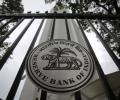
The Reserve Bank of India on Friday decided to keep the benchmark interest rate unchanged at 4 per cent but maintained an accommodative stance as the economy is yet to recover from the impact of the second Covid wave.
